
Leave Your Message
Explore our top-tier stainless steel mixing vessels engineered specifically for demanding commercial kitchens and large-scale catering operations. Designed for seamless nesting, rugged impact resistance, and hygienic preparation.
Designed for rigorous mixing, whipping, and ingredient prep in commercial catering setups.
Learn MoreExtra deep profile prevents splatter during high-volume tossing, whisking, and blending.
Learn MoreFeatures a reinforced flat base for maximum stability on commercial worktables and countertops.
Learn MoreMaintains optimal internal temperatures for temperature-sensitive catering ingredients.
Learn MoreIn the fast-paced, high-pressure environment of commercial kitchens and professional catering services, every piece of equipment must serve as a reliable gear in a complex culinary machine. Among the various utensils, the commercial mixing bowl stands out as an indispensable tool. Far from being a simple container, a professional-grade mixing bowl is engineered to endure continuous mechanical stress, extreme thermal shifts, and rigorous chemical sanitization processes day after day.
Whether it is used for whipping up large batches of delicate meringues, marinating hundreds of pounds of poultry, kneading dense artisanal doughs, or holding prepped ingredients in cold storage, the performance of the mixing bowl directly impacts operational speed, food safety, and overall kitchen efficiency. Choosing the right mixing bowl configuration is not merely a matter of convenience; it is a strategic business decision that affects the kitchen's bottom line, regulatory compliance, and culinary consistency.
Commercial food production requires materials that prevent chemical reactions with acidic ingredients (like citrus or vinegar) and resist pitting, scratching, and bacterial colonization. High-grade 304 (18/8) stainless steel provides the perfect balance of corrosion resistance, structural rigidity, and sanitization capability, making it the globally recognized standard for commercial kitchenware.
Modern catering and commercial kitchens operate under strict regulatory oversight, such as Hazard Analysis Critical Control Point (HACCP) systems and NSF International standards. In these environments, equipment wear and tear is a constant threat. Inferior bowls made of thin metal or low-grade plastics easily dent, warp, or scratch. Scratches create microscopic crevices where food particles and bacteria can hide, posing severe cross-contamination risks.
Additionally, the mechanical stress from industrial immersion blenders, heavy-duty hand mixers, and metal whisks requires a robust structural design. A bowl that flexes under pressure can cause uneven mixing, increase preparation times, and lead to early equipment failure. Therefore, industrial kitchens demand mixing bowls designed with reinforced rims, consistent wall thickness, and specialized bottom profiles to withstand high-torque kitchen machinery.
Our factory was established in 1994.
Our company is continuously committed to the research and development of new products and technologies. Multiple products have been patented, and we will continue to launch new products in the future. Please stay tuned.
The enterprise always adheres to the business philosophy of "integrity, innovation, and progress", winning customer trust and market recognition with high-quality products and a steady and pragmatic attitude. We sincerely welcome customers from home and abroad to cooperate, negotiate, visit and guide us, and create a better future together.
Understanding how mixing bowls are utilized across different sectors of the food industry reveals the depth of engineering required for these seemingly simple products. Let's analyze four core industrial scenarios:
In large-scale restaurant kitchens, preparation begins hours before service. Chefs utilize nested mixing bowl sets to organize prepped ingredients (mise en place). The bowls must stack tightly to save counter and walk-in cooler space, yet separate easily without sticking. Standardized capacities ensure precise ingredient portioning and recipe consistency.
Baking is a science that requires exact thermal conditions. Stainless steel mixing bowls are highly valued for their thermal conductivity. Bakers use them for proofing yeast, tempering chocolate over double boilers, or whipping egg whites. The non-reactive nature of high-grade stainless steel ensures that delicate batters do not acquire metallic tastes.
Catering services operating at banquets, weddings, and corporate events require massive mixing vessels to toss hundreds of portions of salad or blend heavy marinades. These bowls must feature wide, flat rims to ensure catering staff can maintain a firm, ergonomic grip during transport and rapid manual mixing, reducing fatigue and spillages.
As commercial kitchens evolve towards automation and smart technologies, even the humble mixing bowl is experiencing design innovations. The integration of ergonomic silicone bases to prevent slipping on stainless steel prep tables has become a standard. Looking ahead, the industry is witnessing the development of smart prep systems where mixing bowls are designed to interface seamlessly with digital scales and smart recipe management systems.
Furthermore, environmental sustainability is driving manufacturers to optimize production processes. By utilizing clean, energy-efficient stamping and polishing technologies, modern factories are reducing their carbon footprint while producing highly polished, ultra-hygienic satin and mirror finishes. These advanced finishes not only enhance aesthetics but also reduce food adhesion, making cleaning faster and reducing the consumption of water and chemical detergents in commercial dishwashers.
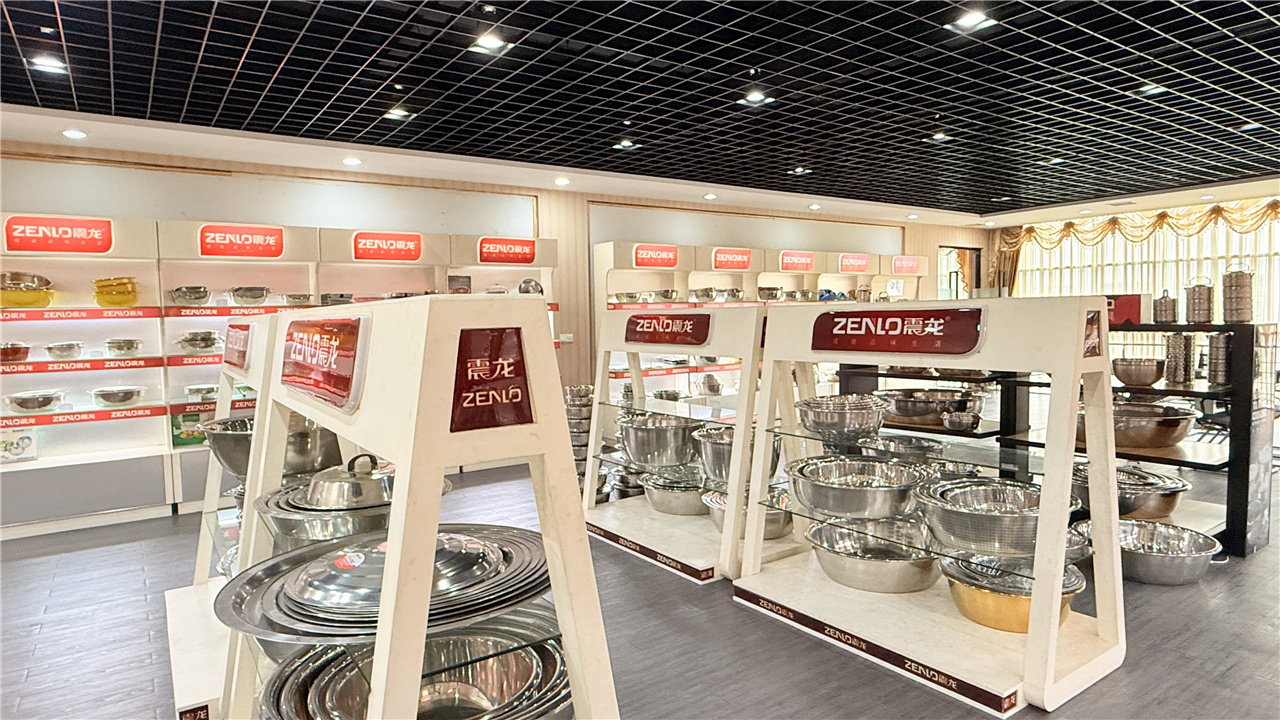
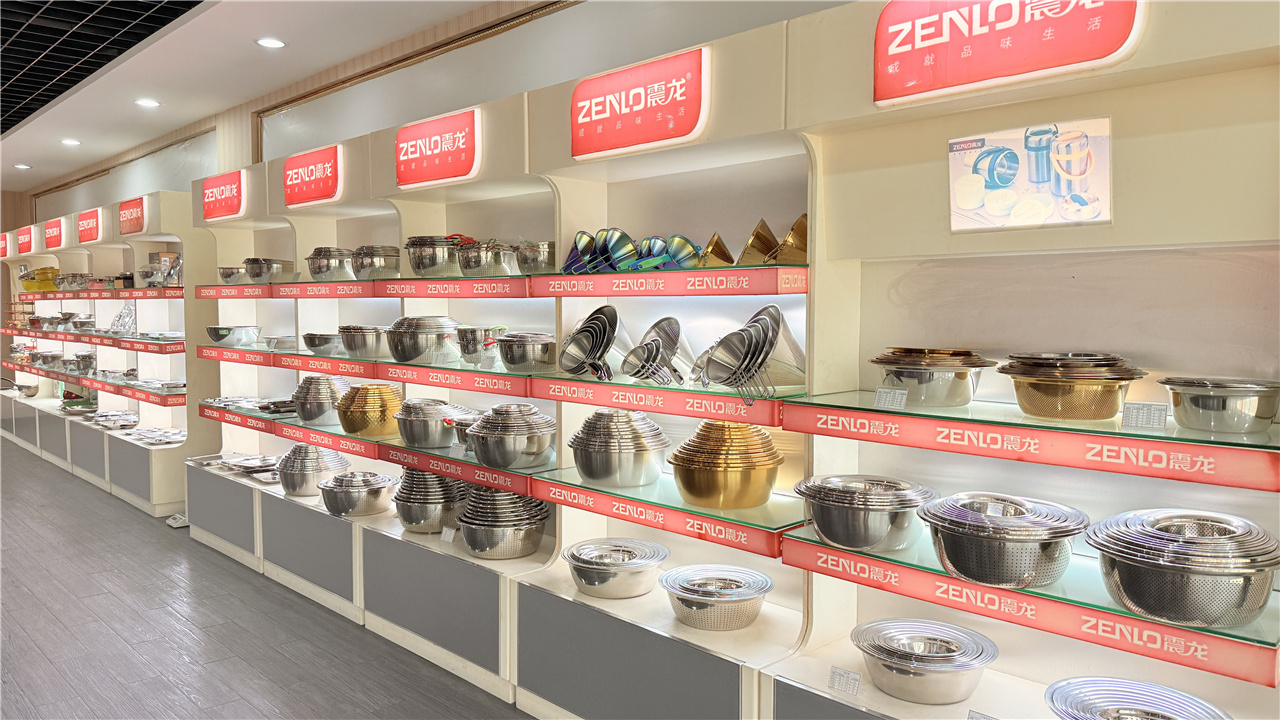
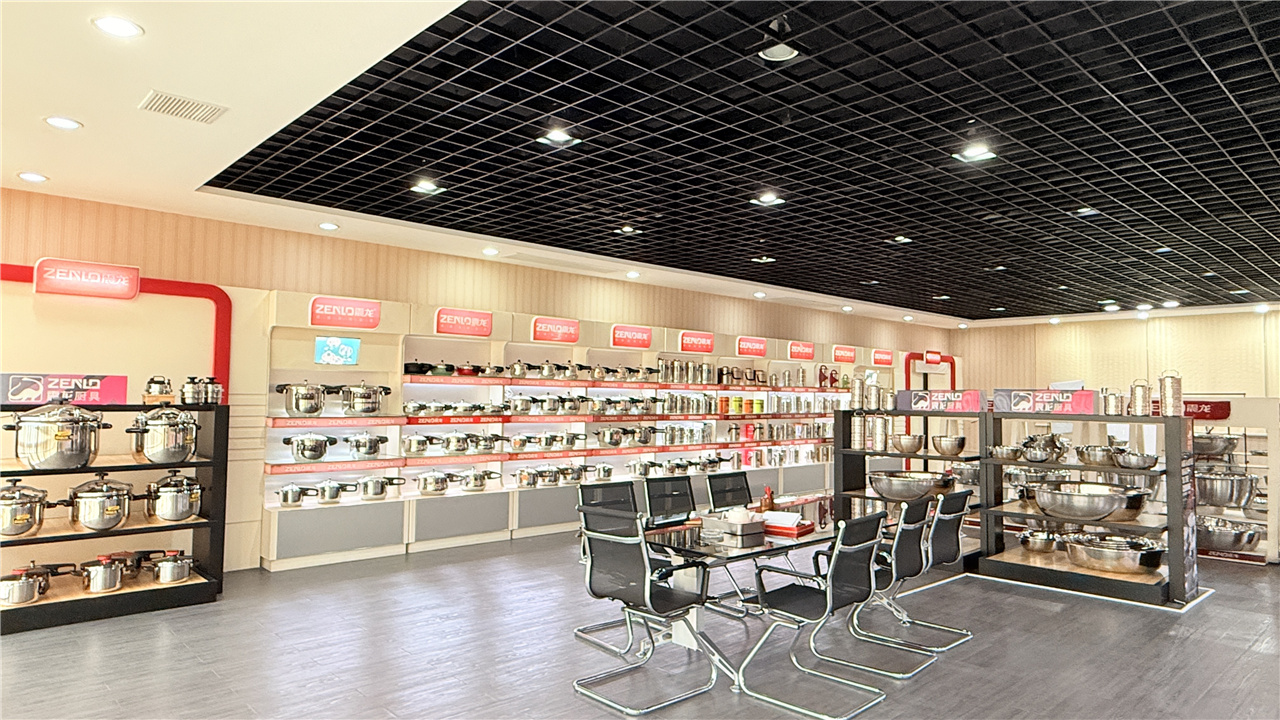
Take a virtual tour of our state-of-the-art exhibition hall, showcasing our extensive line of commercial stainless steel kitchenware, industry-leading designs, and patented culinary technologies.
For procurement managers, executive chefs, and catering business owners, selecting a mixing bowl supplier involves evaluating several technical specifications to ensure long-term ROI. Below are the key parameters to consider during procurement:
The "gauge" of stainless steel refers to its thickness. In commercial settings, heavy-gauge steel (typically 20 to 22 gauge) is preferred for large mixing bowls because it resists denting from heavy drops and mechanical mixers. Light-gauge bowls (24 gauge and above) are suitable for light prep and holding ingredients but may warp under intense commercial use.
Flat-bottomed bowls offer superior stability on flat kitchen work surfaces, making them ideal for heavy whisking, hand-mixing doughs, and storing prep work in refrigerators. Round-bottomed bowls, on the other hand, allow for smoother, more continuous whisking motions and are easier to scrape clean with spatulas, reducing product waste. Many commercial kitchens maintain a balanced inventory of both types.
A rolled rim provides structural reinforcement to prevent the bowl from bending under heavy loads. It also offers a secure handgrip for kitchen staff and prevents liquids from dripping down the outer sides of the bowl during pouring. For high-hygiene environments, open rolled rims are preferred as they do not trap water or food residues during dishwashing cycles.
With the rapid expansion of quick-service restaurant (QSR) chains, ghost kitchens, and large-scale corporate catering, the demand for durable, NSF-certified stainless steel prepware is projected to grow steadily. Manufacturers who combine advanced metallurgy with ergonomic, space-saving designs are positioned to lead the global supply chain.
Discover our complete selection of professional mixing vessels, designed to meet the rigorous demands of executive chefs, bakers, and catering operations worldwide.
Perfect for small-batch dressings, sauces, and quick ingredient staging.
View DetailsVersatile workspace essential for beating eggs, mixing batters, and light prep.
View DetailsEngineered for large-scale salad tossing and mixing heavy batters.
View DetailsDesigned for heavy-duty commercial baking and bulk kitchen preparation.
View DetailsMassive capacity designed for large events, banquets, and commercial bakeries.
View DetailsFeatures a heat-resistant silicone bottom to prevent slipping during high-speed mixing.
View DetailsEtched internal measurement markings for quick, precise recipe measurements.
View DetailsSpace-saving configuration designed to nest perfectly, optimizing kitchen storage.
View Details© 2026 Stainless Steel Kitchenware Manufacturing Corporation. All Rights Reserved. Established in 1994.